

Cloud Solution Dubai: A Complete Guide to Modern Cloud Solutions for Businesses
Cloud computing has become one of the most important technologies driving digital transformation across industries. Organizations are moving beyond traditional IT infrastructure and embracing cloud platforms to improve efficiency, flexibility, and business continuity.
Whether you are a startup looking for cost-effective technology solutions or an enterprise managing large-scale operations, implementing the right cloud solution Dubai strategy can help your business improve performance, reduce operational costs, and support future growth.
What Is a Cloud Solution?
A cloud solution refers to technology services delivered over the internet instead of relying entirely on physical servers and infrastructure located on-site. These services allow businesses to access computing resources, storage, applications, databases, and networking capabilities whenever needed.
Modern cloud solution platforms provide organizations with greater flexibility while eliminating many of the challenges associated with maintaining traditional IT environments.
Why Businesses Are Adopting Cloud Solutions
Organizations across the UAE and globally are embracing cloud technology to improve operational efficiency and support digital innovation.
Cloud adoption offers several important advantages:
- Reduced infrastructure costs
- Improved scalability
- Enhanced data security
- Business continuity and disaster recovery
- Faster deployment of applications
- Remote accessibility
- Improved collaboration among teams
- Automatic updates and maintenance
These benefits have made cloud computing a key component of modern business strategies.
The Growing Demand for Cloud Solution Dubai Services
Dubai has established itself as a major hub for technology innovation and digital transformation. Government initiatives, smart city programs, and increased investment in technology have accelerated cloud adoption across various industries.
Businesses are increasingly seeking professional cloud solution Dubai providers to help modernize infrastructure, improve cybersecurity, and support scalable digital operations.
Industries such as healthcare, finance, retail, logistics, education, and real estate are leveraging cloud technologies to improve productivity and deliver better customer experiences.
Types of Cloud Deployment Models
Organizations can choose different cloud deployment models depending on their business requirements, security needs, and operational goals.
Public Cloud
Public cloud environments provide shared infrastructure managed by third-party providers. They offer cost efficiency and scalability for many organizations.
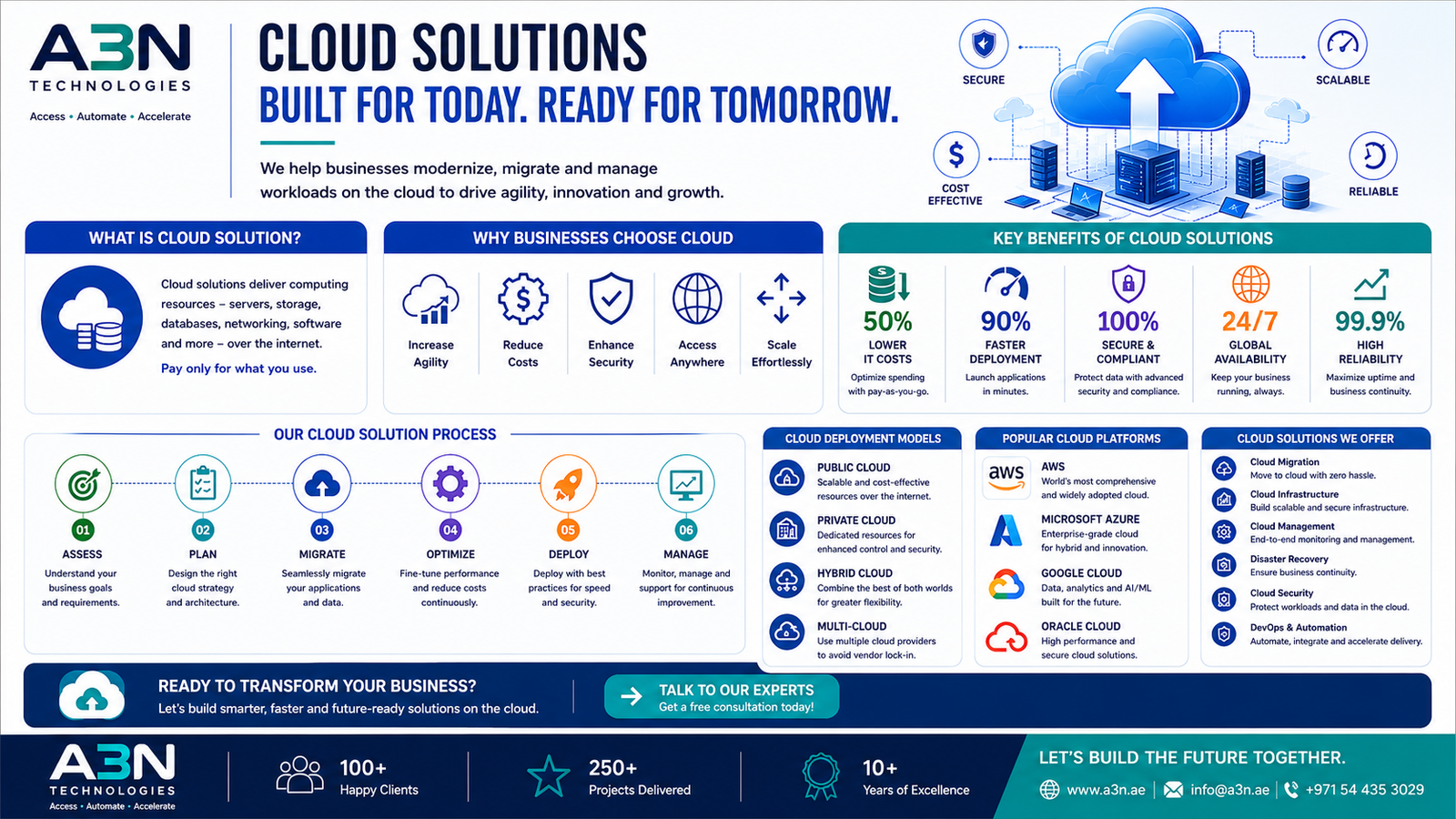
Private Cloud
Private cloud environments are dedicated to a single organization and offer greater control, customization, and security.
Hybrid Cloud
Hybrid cloud combines public and private cloud resources, allowing businesses to balance flexibility and security.
Multi-Cloud Strategy
Some organizations utilize multiple cloud providers to improve resilience, avoid vendor dependency, and optimize performance.
Key Cloud Services Businesses Use
Cloud platforms offer a wide range of services designed to support different business functions.
Cloud Storage
Secure cloud storage enables businesses to store, access, and manage data from anywhere.
Cloud Backup and Recovery
Automated backups help protect critical business data and support disaster recovery planning.
Cloud Infrastructure
Infrastructure services provide virtual servers, networking resources, and computing power without physical hardware investments.
Cloud Applications
Software applications delivered through the cloud allow employees to work efficiently from any location.
Cloud Security Solutions
Advanced security tools help protect systems, applications, and sensitive business information.
Benefits of Implementing a Cloud Solution
Businesses that invest in cloud technology often experience significant operational and financial advantages.
- Lower capital expenditures
- Faster innovation and deployment
- Improved workforce productivity
- Greater business agility
- Enhanced customer experiences
- Better resource utilization
- Reduced downtime risks
- Improved compliance management
Cloud solutions enable organizations to focus more on strategic growth initiatives rather than managing complex infrastructure.
Security Considerations for Cloud Adoption
Security remains one of the most important factors when moving business operations to the cloud.
Organizations should prioritize:
- Data encryption
- Multi-factor authentication
- Access control policies
- Continuous monitoring
- Compliance management
- Regular security audits
- Backup and recovery planning
Working with experienced cloud professionals helps ensure that security remains a core part of the implementation process.
Industries Benefiting from Cloud Technology
Cloud solutions are transforming operations across numerous sectors.
Healthcare
Healthcare providers use cloud platforms for patient management, data sharing, and telehealth services.
Retail and Ecommerce
Retail businesses leverage cloud infrastructure to support online stores, inventory management, and customer analytics.
Financial Services
Financial institutions use cloud technologies to improve operational efficiency and data security.
Education
Educational organizations support digital learning environments through cloud-based platforms.
Logistics and Transportation
Cloud systems improve visibility, tracking, and operational coordination across supply chains.
Emerging Trends in Cloud Computing
Cloud technology continues to evolve as organizations pursue greater efficiency and innovation.
- Artificial Intelligence integration
- Cloud-native application development
- Serverless computing
- Edge computing
- Advanced cloud security solutions
- Automation and orchestration
- Industry-specific cloud platforms
- Sustainable cloud infrastructure
Businesses that adopt modern cloud technologies are often better prepared to adapt to future market demands.
Choosing the Right Cloud Partner
Selecting a cloud provider requires careful evaluation of business goals, technical requirements, and long-term scalability needs.
Evaluate Experience
Look for providers with proven expertise in cloud architecture and implementation.
Assess Security Standards
Security and compliance capabilities should align with your industry requirements.
Consider Scalability
Your cloud environment should support future growth without requiring major infrastructure changes.
Review Support Services
Reliable technical support is critical for maintaining performance and minimizing disruptions.
Conclusion
The adoption of cloud solution Dubai services continues to accelerate as businesses seek greater flexibility, efficiency, and resilience. Cloud technology enables organizations to modernize operations, improve collaboration, strengthen security, and support sustainable growth.
Whether you are exploring your first cloud solution implementation or expanding an existing cloud environment, investing in the right cloud strategy can help your business remain competitive in an increasingly digital world.
Modern cloud-native systems are increasingly designed to support enterprise AI workloads , especially where scalability and real-time processing matter.
At the same time, security models are evolving toward zero trust architectures because traditional perimeter-based security simply doesn't fit distributed infrastructure anymore.
These infrastructure decisions also directly affect modern mobile applications , where users increasingly expect low latency and always-available services.